For decades, the international system has treated protracted displacement as a temporary emergency. Yet refugees often remain displaced for up to 20 years, and 24.9 million refugees were living in more than 1,300 protracted situations worldwide in 2025. Almost 70 per cent of refugees now fall within this definition, but donors continue to finance short-term, annual humanitarian appeals that do little to create pathways for economic advancement or reduce future costs.
This approach is not only unsustainable for refugees and host countries. It is also inefficient for donors and investors.
The breakdown of traditional foreign assistance and the contraction of humanitarian and development aid create an opportunity to transform a system built around prolonged camp-based settings, where millions struggle to survive, into one in which displaced people can contribute meaningfully in their new homes.
The UN High Commissioner for Refugees, Barham Salih, has set an ambitious goal: to reduce by half, by 2035, the number of refugees living in protracted displacement and dependent on humanitarian assistance.
That ambition will only work at scale if protracted displacement is treated not only as a humanitarian concern, but as an economic development challenge and private-sector opportunity—one requiring governments to advance the policies and laws needed for social, economic and financial inclusion.
CoAction Global is therefore developing the Global Facility for Economic Inclusion (GFEI), a financing model intended to shift the economic logic of refugee response from short-term humanitarian assistance toward long-term development led by governments and supported by the private sector.
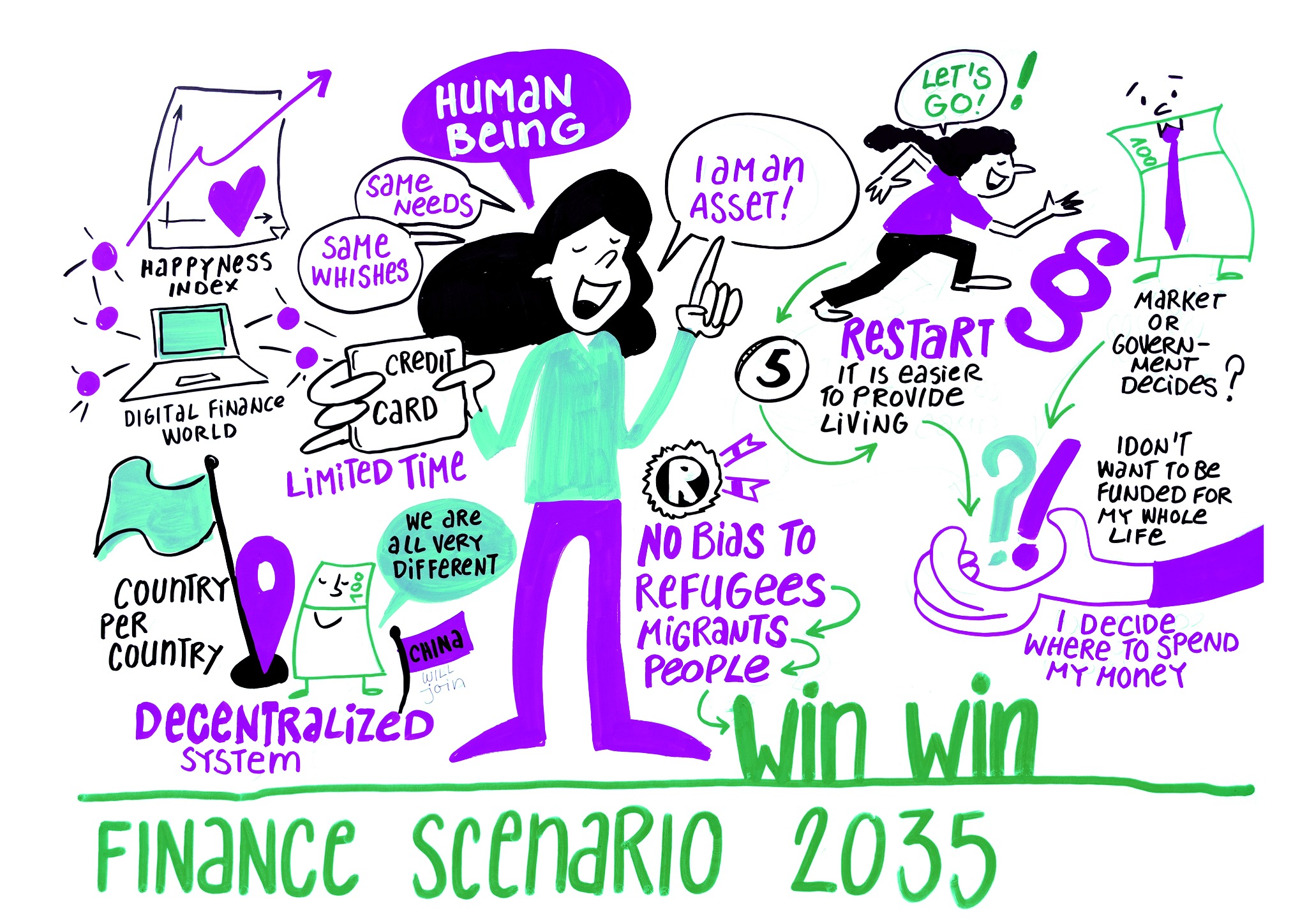
The current system relies on short-term relief, parallel service structures and recurring “emergency” spending. As humanitarian budgets contract, governments, financial institutions, donors and the private sector must instead prioritize the economic independence of refugees and the sustainable growth of host countries.
Too often, low- and middle-income countries are asked to bear the costs of inclusion without credible long-term support. The GFEI would begin to correct this imbalance by linking grant finance, budget support or debt relief to measurable legal and policy reforms. Inclusion would become a financed development opportunity rather than an uncompensated burden—creating an enabling environment for entrepreneurs, investors and the private sector while incentivizing sustained reform.
Refugee displacement is long-term, so financing solutions must be too.
After decades in which donors funded parallel aid systems, governments have often been left outside the central financing architecture. The GFEI places national, regional and local governments at its centre.
The facility would frontload development resources through bond issuance. Host governments would then receive performance-based payments—through budget support or debt relief, depending on country circumstances—when they meet independently verified inclusion benchmarks. These could include expanded access to documentation, work authorization, national health and education systems, or freedom of movement.
At the same time, refugee households would receive direct, predictable and unconditional cash transfers. Families could decide whether to invest in education, training, enterprise, land or other priorities. Access to capital would allow them to move from passive recipients of assistance toward becoming workers, consumers, entrepreneurs and taxpayers.
Together, these elements would realign incentives across refugees, host governments, donors and investors.
For donors, upfront investment should generate savings over time. For governments, performance-based financing would provide resources for implementing reforms rather than merely asking them to make political commitments. For refugees, direct support would provide the agency and capital needed to build livelihoods and participate more fully in local economies.
Accountability would be fundamental. Governments would be paid only when agreed reforms and inclusion outcomes had been achieved and independently verified. Refugee households, meanwhile, would receive support directly and predictably. Over time, this structure would allow parallel humanitarian delivery to be responsibly reduced and offer an alternative to camps that have become semi-permanent settlements without providing their residents with the means to leave them.
The old model is no longer viable. Humanitarian budgets are tightening even as displacement rises. Host countries need financing they can rely on, but that financing should support—and be conditioned upon—credible reforms.
The question is no longer whether inclusion is desirable. It is whether donors and host governments are willing to invest jointly in a financing model capable of making it durable.
If the international community is serious about funding solutions rather than repeatedly treating symptoms, governments, international organizations, philanthropies and private-sector partners should help build this new approach.